Views: 0 Author: Site Editor Publish Time: 2025-11-19 Origin: Site


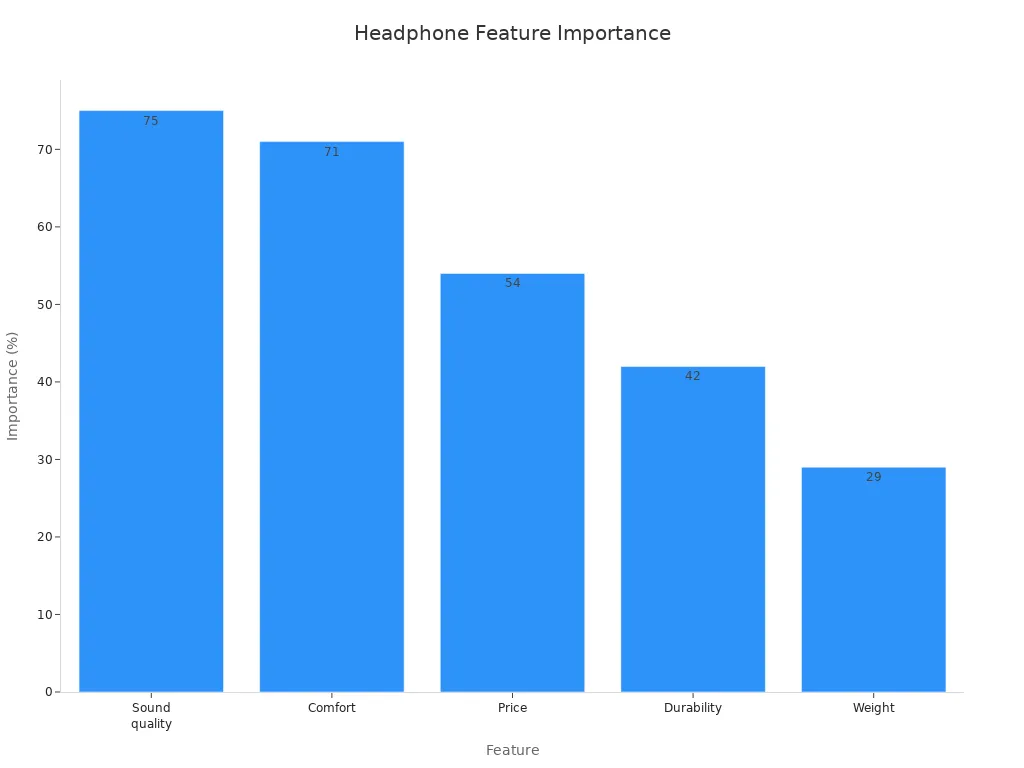
When you choose headphones, you decide how you want to listen. The design, fit, and technology change how music and podcasts sound. These things also change how they feel. People care about different things. For example, most people want good sound quality. Many people also want comfort.
You might like in-ear models because they give you freedom. You might like over-ear ones because they have rich sound. Each type of headphone gives you a special way to listen. Think about what you want most before you pick one.
When you look at the different types of headphones, you notice that fit changes everything. The way headphones sit on your ears or in your ears affects how they feel, how they sound, and where you want to use them. Some headphones feel like pillows around your ears. Others almost disappear inside your ear canal. The right fit can make your music sound better and keep you comfortable for hours.
Tip: If you plan to wear headphones for a long time, pay close attention to fit. A good fit means less discomfort and better sound.
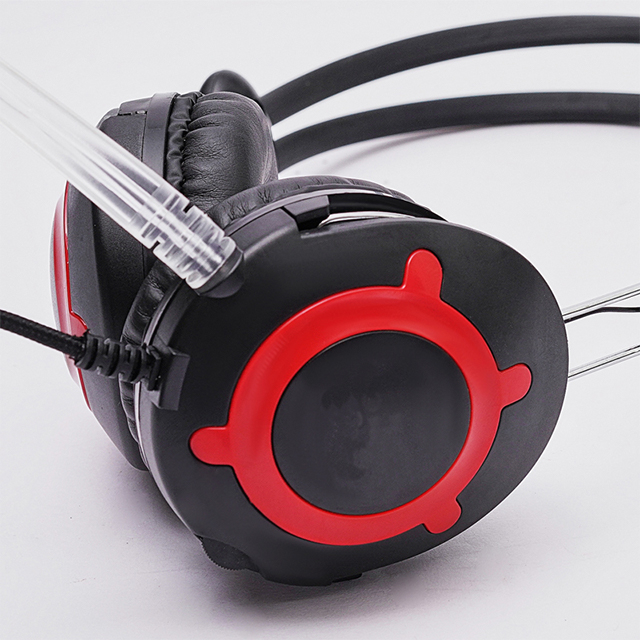
Over-the-ear headphones, also called over-ear headphones, surround your entire ear. You get a big, cushy earcup that covers your ear and blocks out a lot of outside noise. This type of fit gives you a private listening space, almost like a soft hug for your ears.
Here’s what makes over-the-ear headphones unique:
The headband often has extra padding or a flexible bridge. This helps you stay comfortable, even if you wear them all day.
Lightweight designs put less strain on your neck. You can listen longer without feeling tired.
The clamping pressure matters. It needs to be just right—tight enough to keep sound in, but not so tight that it hurts.
Earpads are thick and breathable. You avoid hot spots and sweaty ears.
You’ll love over-the-ear headphones if you want the best sound quality. They create a seal around your ears, which means you hear more details and less background noise. Lab tests show that over-ear headphones do a great job reducing noise, especially when you want to focus at home or in the office.
Headphone Type | Portability | User Preference |
|---|---|---|
Over-ear headphones | Bulkier, heavier (300g+), less portable | Preferred for home, studio, or office use where sound quality is prioritized |
Note: Over-the-ear headphones are not the best for travel. They take up more space in your bag and feel heavier than other types.
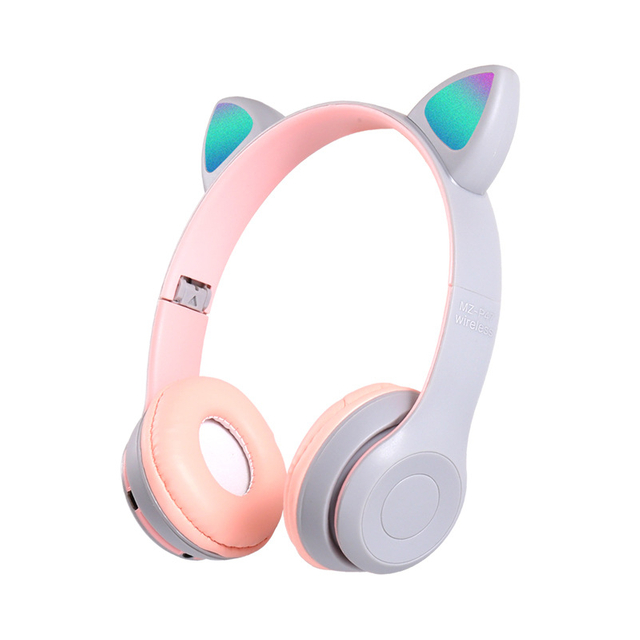
On-ear headphones, sometimes called supra-aural headphones, rest right on top of your ears. They don’t cover your ears completely like over-the-ear headphones. Instead, they press gently against your ears.
What makes on-ear headphones stand out?
They are smaller and lighter than over-the-ear headphones. Many models fold up, so you can toss them in your backpack.
People who travel or commute often pick on-ear headphones. They fit city life and busy schedules.
You get decent sound, but not as much noise isolation as over-the-ear headphones. Some sound leaks out, and you might hear more of what’s happening around you.
Headphone Type | Portability | User Preference |
|---|---|---|
On-ear | Smaller, often foldable, weighing under 200g, ideal for travel and urban use | Preferred for commuting and urban lifestyles due to compactness |
Some users say on-ear headphones leak sound, especially at higher volumes. If you listen in a quiet library, people nearby might hear your music.
Comfort depends on the padding and how much pressure the headphones put on your ears. Too much pressure can make your ears sore after a while.
Earbuds are tiny headphones that sit just outside your ear canal. You don’t push them deep into your ear. Instead, they rest in the outer part of your ear. Earbuds are super light and easy to carry.
Here’s why you might choose earbuds:
They fit in your pocket. You can take them anywhere.
Earbuds are great for quick listening sessions or when you want to hear what’s going on around you.
They don’t block much outside noise. You’ll hear traffic, people talking, or announcements at the train station.
When it comes to sound, earbuds do a good job with clarity and balance. Some models have active noise cancellation, but they still don’t match the noise-blocking power of over-the-ear headphones. If you want to stay aware of your surroundings, earbuds are a smart pick.
Note: Earbuds come in different shapes and sizes. If they’re too big, they feel loose and fall out. If they’re too small, they can hurt your ears. Finding the right size matters for comfort and stability.
Key Findings | Implications |
|---|---|
Excessively large dimensions of TWS earphones hinder proper fitting | Leads to discomfort and instability |
Excessively small dimensions cause discomfort | Affects long-term wearability |
Significant differences in ear measurements between sexes | Highlights the need for personalized fit in design |
In-ear headphones go a step further than earbuds. You insert them into your ear canal, so they fit snugly and stay in place. This design gives you better sound isolation and a more immersive experience.
Why do people love in-ear headphones?
They block out more noise than earbuds. You can listen at lower volumes, even in noisy places.
Foam tips give you the best seal and comfort. Silicone tips are common, but they don’t block as much noise.
In-ear headphones are perfect for athletes and commuters. They stay put during runs, bike rides, or busy subway rides.
You also get some health benefits. A good fit means you don’t have to turn up the volume to drown out noise. This helps protect your hearing over time.
Factor | Impact on Hearing Health |
|---|---|
Fit and Seal of Earbuds | Poor fit leads to increased volume to compensate for noise. |
Listening Environment | Users in noisy environments prefer higher volumes, risking hearing damage. |
In-ear headphones help you stay aware of your surroundings. Some models let in outside sounds, which is safer for running or biking outdoors.
You get comfort during physical activities. The design keeps them from falling out, even when you move a lot.
Tip: Try different eartip sizes to find the best fit. A good seal means better sound and less risk to your ears.
The fit of your headphones changes how comfortable they feel and how well they block noise. Over-the-ear headphones give you the most comfort and the best sound isolation. On-ear headphones are lighter and easier to carry, but they leak more sound. Earbuds are the most portable, but they don’t block much noise. In-ear headphones offer a snug fit and great isolation, making them a favorite for people on the go.
When you pick between the different types of headphones, think about where you’ll use them and how long you’ll wear them. The right fit makes all the difference.
Technology changes how headphones work for you. You get new features and better sound. There are many ways to use them. Each technology fits your life in a different way. Some headphones block out noise. Others let you hear what is around you. Some connect with no wires. Others use a cable for pure sound. Let’s see what makes each type special.
Noise-canceling headphones use active noise cancelling to help you focus. Tiny microphones listen to sounds near you. The headphones make an opposite sound wave called anti-noise. This cancels out steady noise like airplane engines or air conditioners.
Noise-canceling headphones are very popular now. In the last five years, more people started using them. Remote workers use them a lot. Sales went up by over 30% last year. The market is worth billions and keeps growing. People want to block noise and work or study in peace.
Active noise cancelling headphones work well in busy places. You can use them in gyms, offices, or on airplanes. They make a quiet bubble around you. You hear your music or podcast, not the noise outside.
Tip: If you want to block city sounds, pick noise-canceling headphones with strong active noise cancelling.
Active noise cancelling is also used in other systems to lower loud noise. This makes these headphones good for city life. You get less stress from loud sounds. You also protect your ears from constant noise.
Noise-canceling headphones often use dynamic drivers. These drivers give you clear sound and strong bass. Some expensive models use planar magnetic drivers for more detail. You get rich sound and less background noise.
Feature | Benefit |
|---|---|
Active noise cancelling | Blocks steady, low sounds |
Dynamic drivers | Clear sound, strong bass |
Planar magnetic drivers | Detailed sound, less distortion |
You can use ambient-sound headphones if you want to hear what’s around you. Some noise-canceling headphones have an ambient mode. You press a button to let in outside sounds. This is helpful when you walk outside or need to hear announcements.
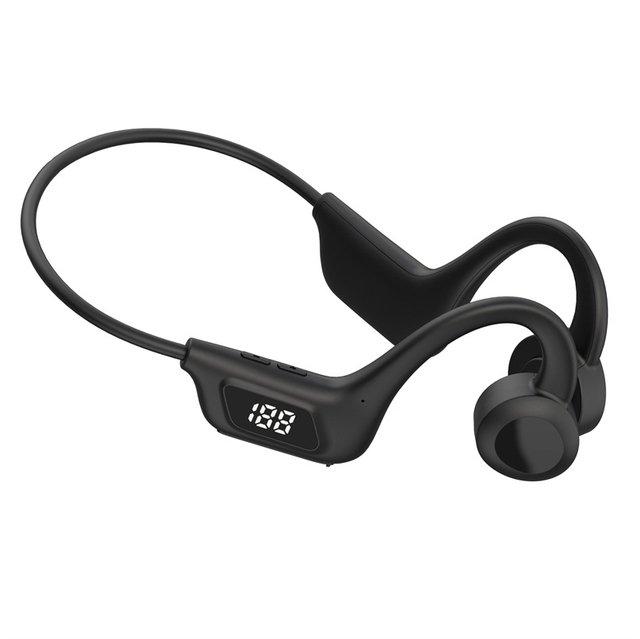
Bone conduction headphones use a different technology. They send sound through your cheekbones, not your eardrums. You wear them above your ears. Your ears stay open, so you hear music and the world at the same time.
People choose bone conduction headphones for safety and comfort. You can hear cars, bikes, or people talking while you listen. This is good for running, biking, or walking outside. Hearing experts say bone conduction headphones are good for people with single-sided deafness or mild hearing loss. You also avoid ear infections because nothing blocks your ear canal.
You lower your risk of ear damage. Bone conduction headphones do not use your eardrum.
You avoid earwax buildup and skin problems. The open design keeps your ears clean.
You stay aware of your surroundings. This helps you stay safe outside.
Bone conduction headphones have some limits. You do not get deep bass. The sound can leak out, so people near you might hear your music. If you turn up the volume too high, you can still hurt your hearing. You might feel skin irritation if you wear them for a long time or sweat a lot.
Benefit | Limitation |
|---|---|
Open-ear safety | Less bass, sound leakage |
Lower risk of infection | Possible skin irritation |
Good for outdoor activities | Volume still matters for hearing |
Bone conduction headphones are great for exercise, watching TV, or taking calls while staying alert. You can use them for mild to moderate hearing loss. You get a comfortable fit and stay connected to your environment.
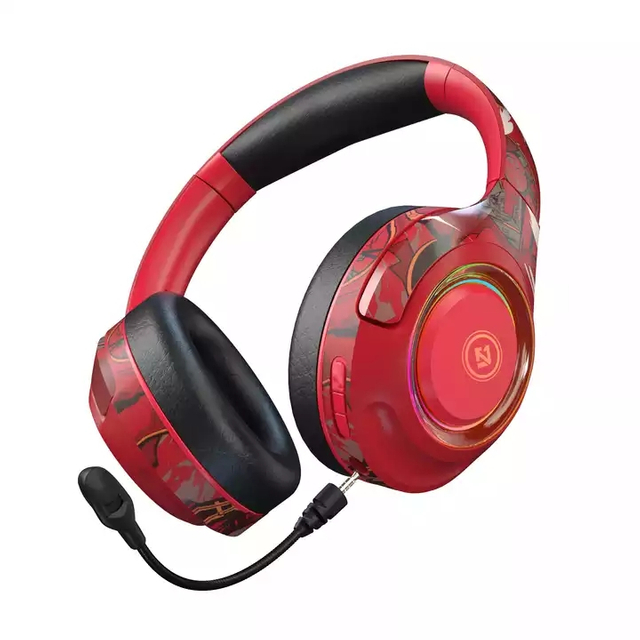
Wireless headphones give you freedom. You do not need a cable. You connect with Bluetooth and move around easily. In 2024, wireless headphones made up 65% of all headphones sold. More people pick them every year. Phones without headphone jacks and active noise cancelling make wireless headphones popular.
Wireless headphones have many new features. You get active noise cancelling, ambient sound modes, touch controls, and voice assistant support. Some models track your fitness. You get longer battery life, so you can listen for hours. Pairing is fast, and connections are stable. You can walk farther from your device and still hear your music.
Noise cancellation
Ambient sound modes
Touch controls
Voice assistant integration
Fitness tracking
Extended battery backup
Faster pairing times
Stable connections
Extended range
Wireless headphones use dynamic drivers for strong sound. Some expensive models use planar magnetic drivers or electrostatic drivers for better detail. You get good sound and lots of features.
Ambient-sound headphones are common in wireless models. You can switch between blocking noise and letting in outside sounds. This helps when you need to talk to someone or hear traffic.
Note: Wireless headphones are great for travel, workouts, and daily life. You do not worry about tangled cables.
Wired headphones connect straight to your device. You get pure sound with no compression. Audio engineers say wired headphones give you the best audio fidelity. Wireless headphones use Bluetooth, which compresses sound and can lose some quality. Wired headphones keep every detail.
Wired headphones connect directly to your audio source.
You get full fidelity and no lag.
Wireless headphones use Bluetooth, which compresses audio and may lose quality.
Even with high-quality codecs, wireless headphones can’t match wired headphones.
Wired headphones use dynamic drivers for strong bass and clear sound. Some studio models use planar magnetic drivers or electrostatic drivers for better accuracy. You get true sound, which is important for music lovers and professionals.
Use Case | Why Choose Wired Headphones |
|---|---|
Studio recording | Consistent sound, no latency |
Broadcast settings | Reliable connection, pure audio |
Audiophile listening | Best fidelity, no compression |
Professional audio settings need wired headphones. You get almost no delay and steady sound quality. Studios use high-quality cables with gold-plated connectors to keep the signal strong. Wired headphones are also good for gaming and watching movies. You do not worry about battery life or connection drops.
Ambient-sound headphones are less common in wired models, but some have open-back designs. These let in outside sounds and give you a natural listening experience.
Tip: If you want the best sound and do not mind a cable, wired headphones are the top choice.
Headphones use different driver types to make sound. Dynamic drivers are the most common. They give you strong bass and clear mids. Planar magnetic drivers offer better detail and less distortion. Electrostatic drivers give you the purest sound, but they cost more and need special equipment.
Dynamic drivers: Strong bass, clear sound, used in most headphones.
Planar magnetic drivers: Detailed sound, less distortion, found in high-end models.
Electrostatic drivers: Pure sound, very accurate, used by audiophiles.
Ambient-sound headphones often use dynamic drivers. You get good sound and can switch between noise-canceling and ambient modes.
When you pick headphones, think about the technology. Active noise cancelling helps you focus. Bone conduction headphones keep you safe outside. Wireless headphones give you freedom and features. Wired headphones give you the best sound. Driver type changes how your music feels. Dynamic drivers are strong and clear. Planar magnetic drivers and electrostatic drivers give you more detail.
Ambient-sound headphones let you choose what you hear. You can block noise or stay aware. Technology makes headphones fit your life. You get comfort, safety, and great sound.
Callout: Try different types of headphones by technology. You will find the one that matches your needs and style.
When you look at the different types of headphones by design, you see how much the shape and build change your experience. The design affects sound quality, how much noise you hear from the outside, and where you’ll want to use your headphones. Some designs keep your music private, while others let sound flow in and out. Let’s break down what makes each style unique.
Closed-back headphones keep your music in and the world out. You get ear cups that seal around your ears, blocking outside noise. This design helps you focus, even in busy places like offices or public spaces. You hear more music and less chatter.
Closed-back headphones block outside noise, giving you better sound isolation.
The ear pads and cup materials can boost bass, but sometimes you might notice extra resonance in the low end.
You can fix some bass issues by changing the pads or adding mass to the cups.
You’ll find closed-back headphones perfect for studios, gaming, or anywhere you need privacy. You can listen at lower volumes because the isolation is so good. This means less ear fatigue and a more enjoyable time with your favorite tracks.
Tip: If you want to hear every detail without turning up the volume, closed-back headphones are a smart pick.
Open-back headphones let sound escape through the back of the ear cups. This design gives you a wide, airy soundstage. Your music feels natural and spacious, almost like you’re in the room with the band. You can pick out where each instrument sits.
You’ll love open-back headphones if you want a realistic listening experience. They shine in quiet places, like your living room or a studio. Many audiophiles and sound engineers use them for mixing and mastering because they offer less ear fatigue and a true-to-life sound.
Open-back headphones give you a natural sound and better imaging.
They work best in quiet environments since they don’t block outside noise.
You might notice less bass and some sound leaking out, so they’re not great for public spaces.Waterproof and Sports HeadphonesWaterproof and sports headphones are built for action. You can run, bike, or swim without worry. These headphones have special water resistance ratings, like IPX7, so they handle sweat, rain, and even a quick dip in the pool.
Water resistance ratings (like IPX7) show how well your headphones handle water.
You get a secure fit with adjustable tips or ear hooks, so they stay put during workouts.
High-quality drivers keep the sound clear, even when wet.
Long battery life and quick charging help you power through long sessions.
Durable builds resist dust, sweat, and drops.
Headphone Model | Waterproof Rating | Durability Features |
|---|---|---|
JLab Go Air Sport | IP55 | Efficient dust protection; withstands splashes and power streams of water. |
Jabra Elite Active | IP57 | Can be submerged in up to 1 meter of water for 30 minutes; dust protection. |
General Waterproof Features | N/A | Can be rinsed or cleaned; useful for preventing ear wax build-up after workouts. |
If you use in-ear headphones or in-ear monitors for sports, you’ll notice how important a secure fit and sweat resistance are. These types of headphones by design keep up with your active life and deliver great sound quality wherever you go.
You have many types of headsets to choose from, each with its own fit, design, and technology. The most common type of headphones, like over-ear headsets, offer comfort and great audio quality. Other headsets, such as true wireless earbuds, give you freedom and fit active lifestyles. Think about what matters most to you:
Design
Sound quality
Comfort
Connectivity
Noise cancellation
Price
Experts say you should match headsets to your daily routine. If you love the gym, true wireless earbuds might be best. For home listening, the most common type of headphones or wired headsets could be perfect.
Try different types and see which headsets and true wireless earbuds fit your needs. You will find the right headsets for your favorite music and activities.
You should choose over-ear headphones. They feel soft and comfortable. The big ear cups help you listen for hours without hurting your ears.
Wireless headphones sound great for most people. Wired headphones give you the best audio quality. If you love music details, wired is the way to go.
Yes, bone conduction headphones keep your ear canals open. You hear music and sounds around you. They lower the risk of ear infections and help you stay aware.
Your earbuds should feel snug but not hurt. If they fall out or feel loose, try a different size tip. A good fit gives you better sound and comfort.